Language
 EN
 RU
 ES
 DE
 EL
 IT
 JA
 KO
 PT
 ID
 SR
 UK
 VI
 TH
 TR
 MS
 BE
 AR
Safety Valve Test Bench & Hydraulic Comprehensive Test System: Resolving Pressure Valve Leakage and Flow Failure in Caterpillar and Komatsu Hydraulic Systems
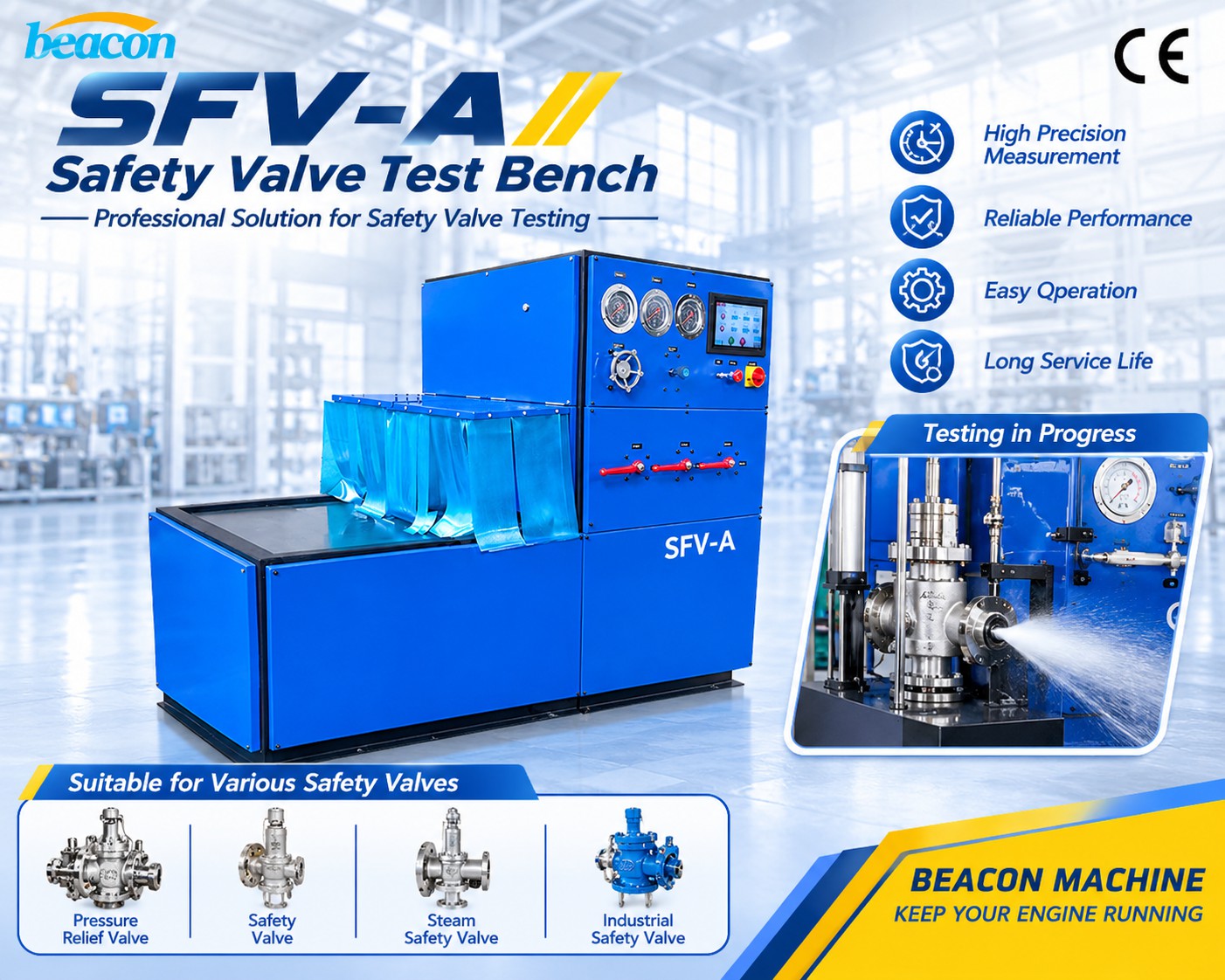
1. What is the Beacon SFV-A Safety Valve Test Bench?
The Beacon SFV-A Safety Valve Test Bench is an industrial-grade testing platform designed to evaluate opening cracking pressure, real-time traffic flow, reseating pressure, and internal leakage of heavy-duty relief components. It serves as an integrated overflow valve tester and pressure relief valve test equipment for heavy machinery, common rail diesel platforms, and stationary power plants.
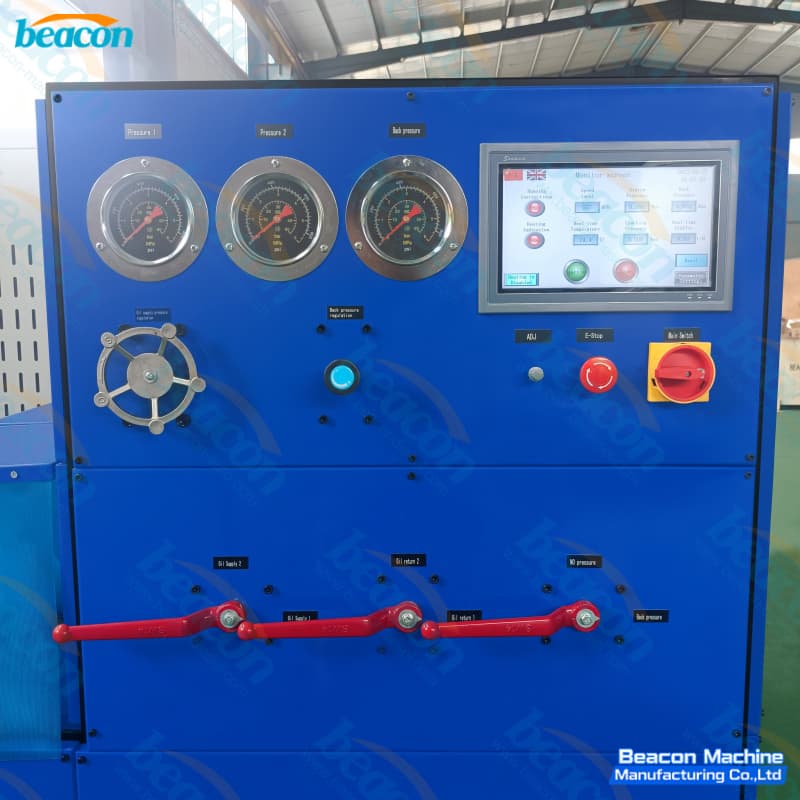
Equipped with a precision digital touch screen interface (Samkoon HMI system), dual-station testing manifolds, and independent back-pressure simulation, the SFV-A enables remanufacturing centers and repair shops to verify parts according to strict OEM performance curves.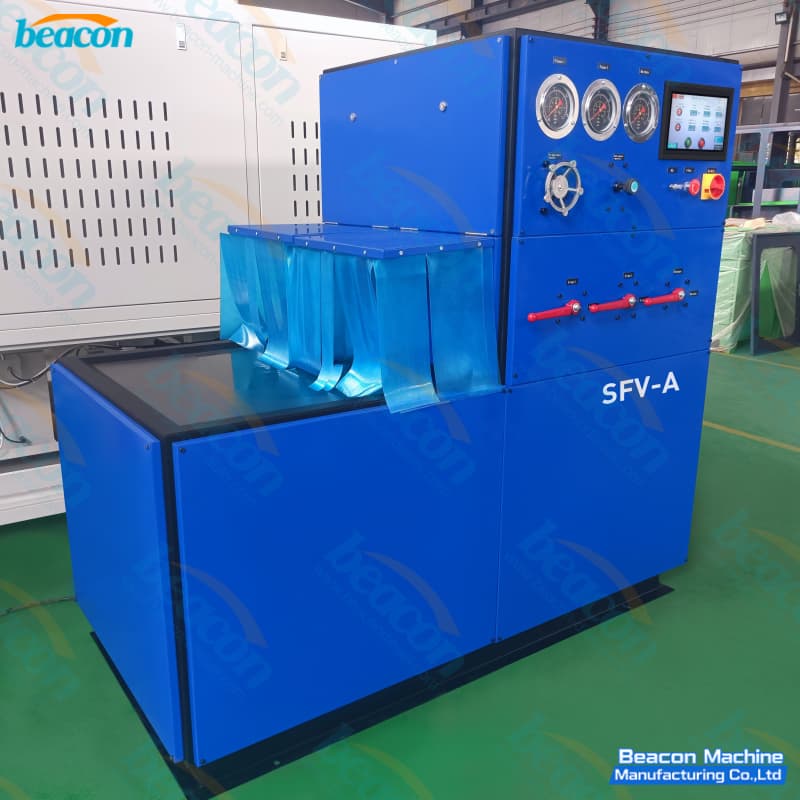
2. Industry Pain Points & Symptoms Solved
In modern high-pressure common rail injection (HPCR) systems and high-tonnage construction equipment, subtle pressure valve failures account for more than 35% of diagnostic errors. The SFV-A directly targets the underlying root causes:
Hard Starting or Crank-No-Start Conditions: Caused by premature opening or seat wear in Bosch-style rail limiters (e.g., 1110010015, 1110010028, 1110010018), resulting in insufficient rail pressure accumulation during cranking.
Engine Surging & Unstable Idle: Sticky spool valves or fatigued internal springs in Cummins ISX15, QSM11, or CAT C9 / C15 fuel circuits that trigger diagnostic trouble codes such as SPN 157 FMI 18 / FMI 1.
Sluggish Boom / Arm Motion in Heavy Machinery: Weak relief valves on Komatsu PC200-8 or Caterpillar 320D/336D hydraulic pumps leading to bypass leakage before reaching peak system pressure.
Hydraulic System Overheating & Power Loss: Continuous internal bleed through damaged pilot seats, causing oil temperatures to surge past safe limits (>80°C) and lowering pump volumetric efficiency.
3. Technical Specifications & Operating Parameters
The SFV-A is engineered with heavy-gauge steel architecture, industrial filtration loops, and a high-flow delivery circuit to accommodate diverse valve sizes and flow volumes.
| No. | Project Parameter | SFV-A Specification Index |
|---|---|---|
| 1 | Drive Motor Power | 7.5 kW |
| 2 | Motor Speed Range | ≤ 3000 r/min (Variable Speed Control) |
| 3 | Maximum Hydraulic Flow | 160 L/min |
| 4 | Internal Fuel / Oil Tank Capacity | 400 L |
| 5 | Maximum Testing Pressure (Circuits) | 3 MPa (30 bar dynamic test circuit standard) |
| 6 | Oil Tank Temperature Control | 0 ~ 80 °C |
| 7 | Operating Power Requirements | Three-Phase Five-Wire (A, B, C, N, PE), Cable ≥ 4mm² |
| 8 | Environmental Operating Limits | 5 °C to 30 °C, non-explosive ambient atmosphere |
4. Operational Architecture & Interface Features
The test bench utilizes a bilingual human-machine interface (Chinese/English switchable at the top-left corner) that displays real-time parameters:
Cracking Pressure Display: Pinpoints the microsecond an overflow valve initiates flow bypass.
Real-Time Traffic Measurement (L/min): Quantifies volume to detect internal flow restrictions.
Independent Back-Pressure Circuit: Enables real-world simulation of pressurized drain lines.
Dual Testing Stations (Site 1 & Site 2): Accelerates batch-testing through multi-port manifolds with dedicated return paths.
Standard Operation Workflow:
Line Verification: Secure tested parts into Station 1 or Station 2 ports (Oil Supply & Return).
Direction Selection: Adjust the manual directional handle to align with the chosen testing station. (Note: Stop the motor before switching stations or regulating back pressure conversion handles.)
Pump Engagement: Start the drive motor and set the rotational target via the rotary speed knob.
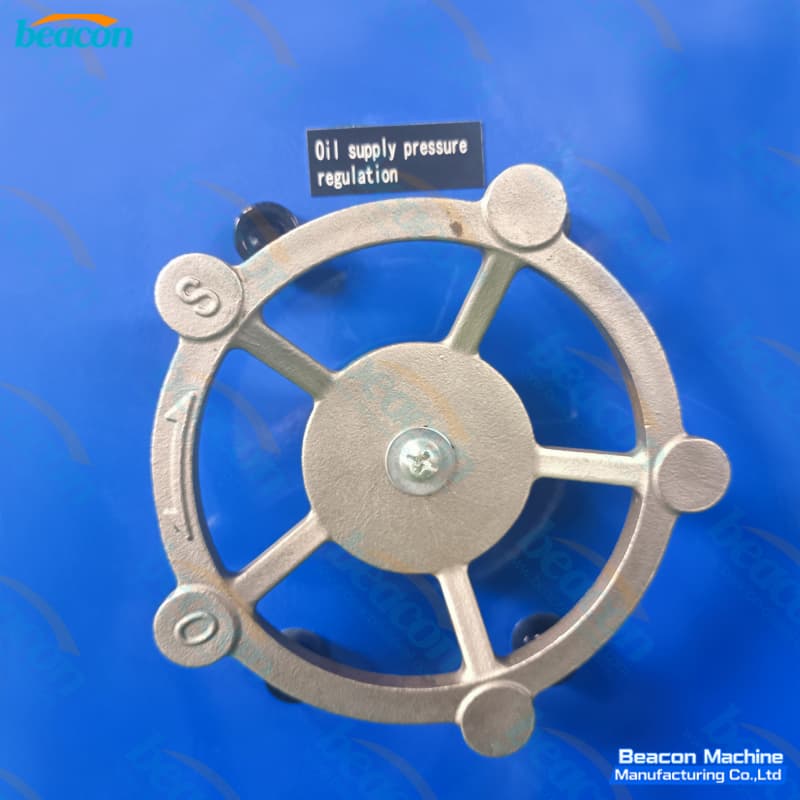
Gradual Pressure Adjustment: Slowly rotate the manual oil supply regulation wheel from low to high until flow meters detect initial fluid discharge.
Data Recording: The digital screen automatically logs cracking point, back pressure baseline, and fluid temperature.
5. Preventative Maintenance & Shop Safety
To ensure ongoing measurement accuracy and extend component lifespan:
Test Oil Management: Regularly check fluid levels via the external sight glass; replenish with calibrated clean ISO 4113 test oil or quality hydraulic medium whenever fluid drops below minimum thresholds.
Drainage Filtration: Excess residual oil is automatically captured through the leakage collector into the scrap box located behind the service door. Clean the scrap collector weekly.
Grounding & Electrical Safety: Always bond the PE conductor to a dedicated facility ground. Never ground to water or gas pipelines.
Related News
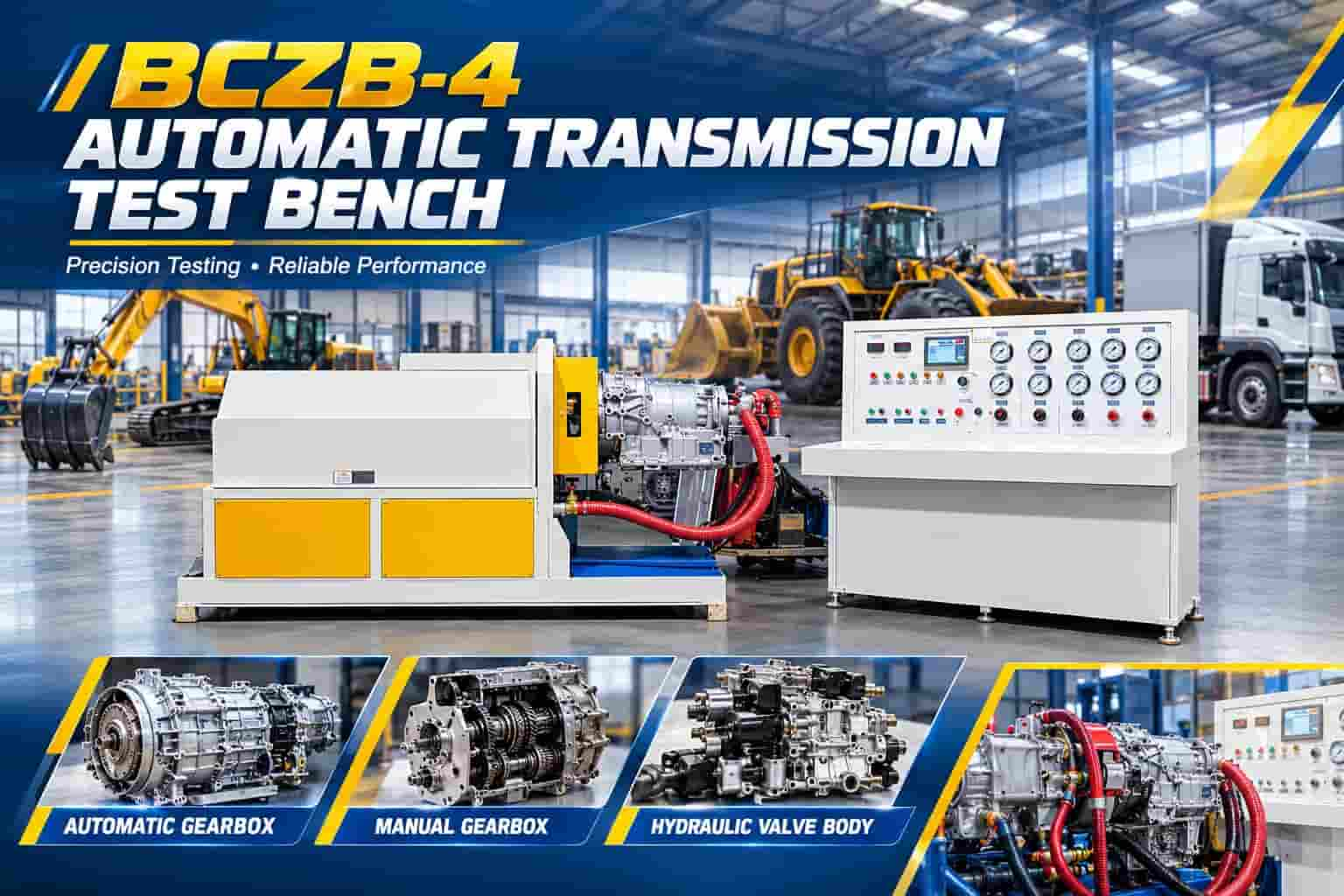
Professional ZF-Ecolife Transmission Test Bench & Automatic Gearbox Diagnostic Solution: Solving ZF 6AP 1200 B Transmission Pressure Loss and Gearbox Faults BEACON MACHINE
Oct. 15, 2026Maximize workshop precision with our Automatic transmission test bench. Designed for ZF 6AP 1200 B transmission service, this gearbox diagnostic solution identifies ZF-Ecolife pressure loss and valve body malfunctions in heavy-duty commercial vehicles and bus transmissions.+ Details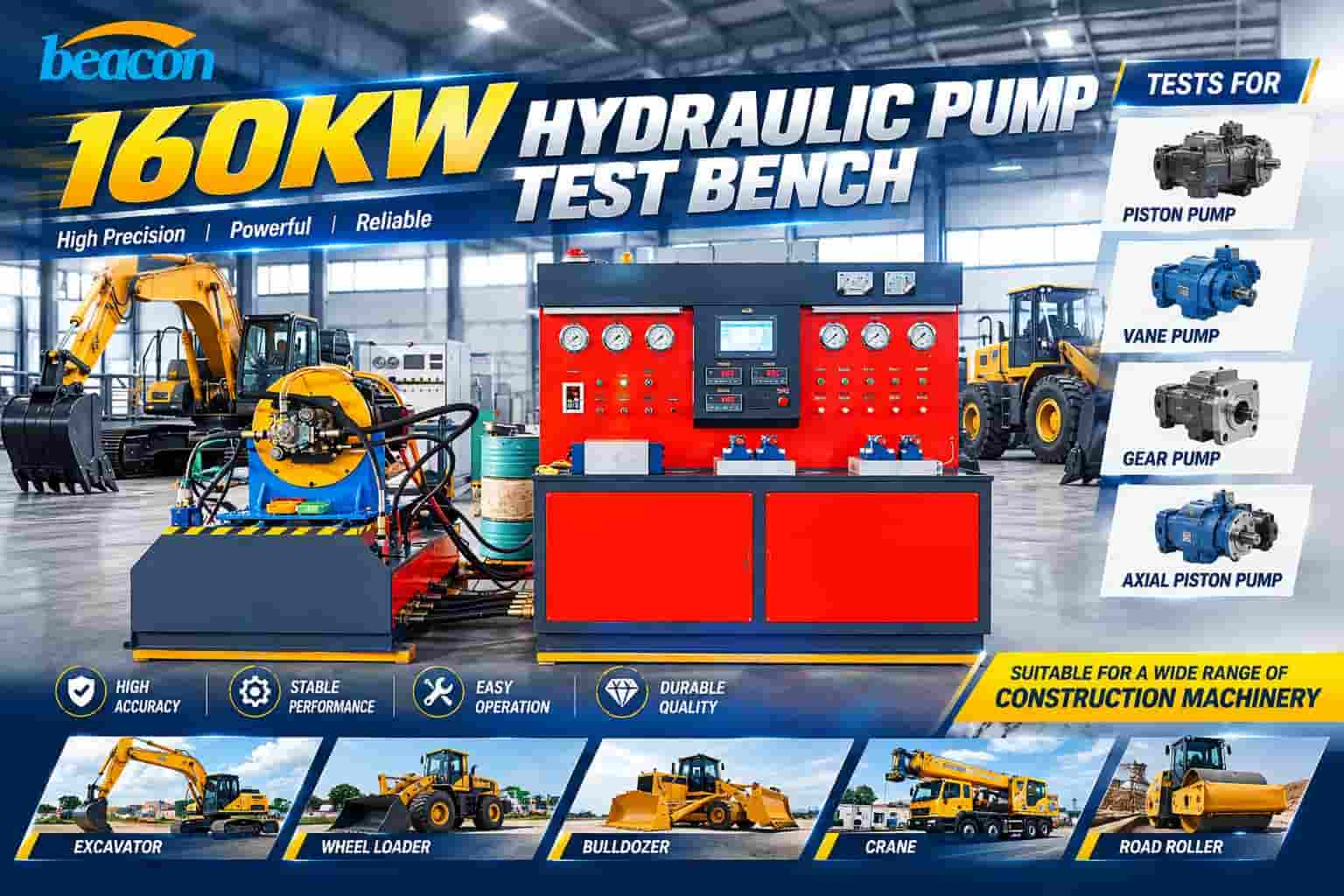
The Definitive Guide to Industrial Hydraulic Pump Testing: High-Pressure Performance Diagnostics for Heavy-Duty Engines and Machinery with the HP-B Test Bench BEACON MACHINE
Oct. 15, 2026Optimize your maintenance workflow with our professional Hydraulic Pump Test Bench. Achieve superior high-pressure hydraulic pump diagnostics for mining, marine, and construction machinery. BEACON MACHINE provides the ultimate heavy-duty industrial hydraulic system repair solution for global workshops requiring OEM-level precision calibration.+ Details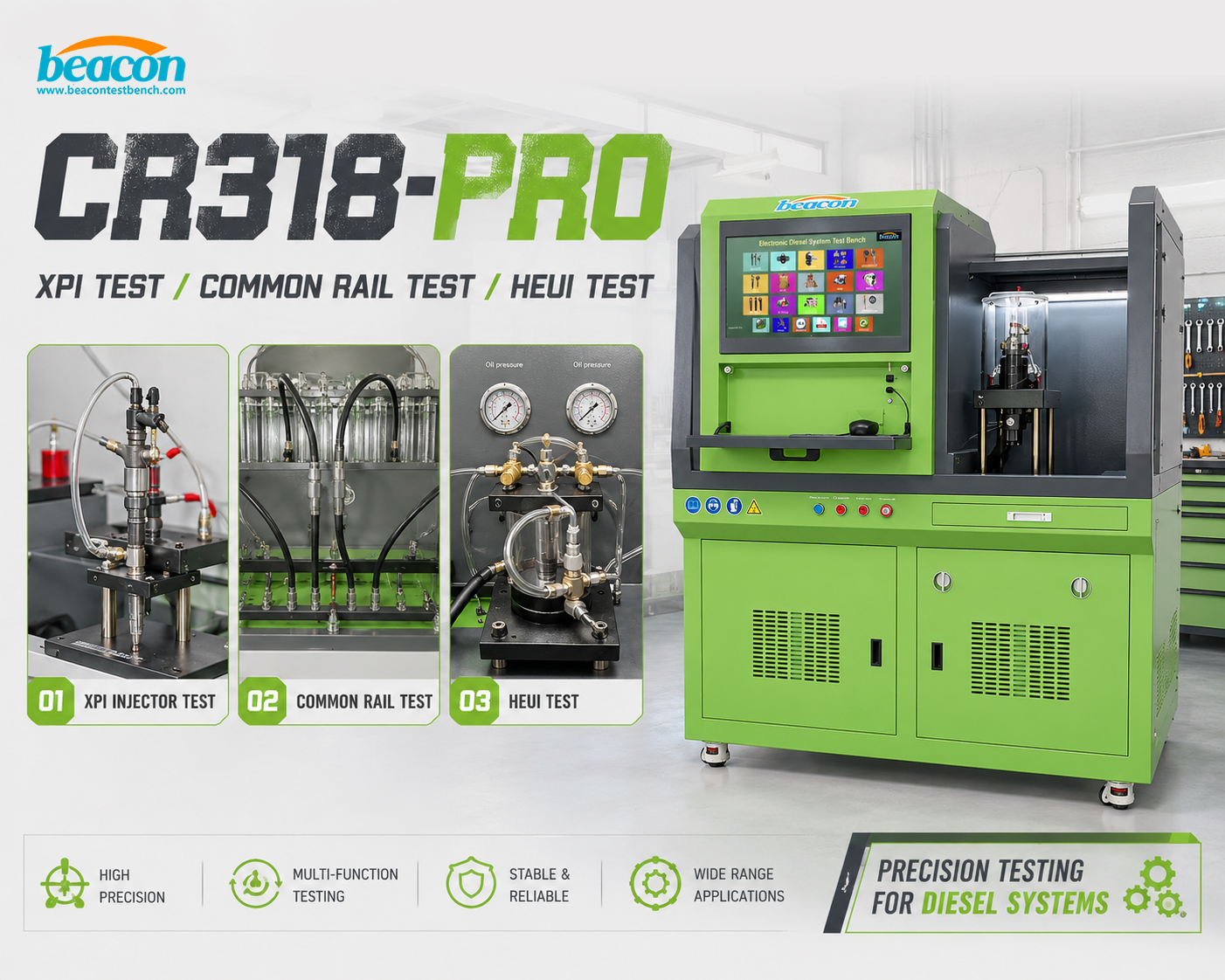
Mastering the Comprehensive Diesel Injection System Diagnostic Solution: The Ultimate Common Rail Test Bench and HEUI Test Stand Guide
Aug. 31, 2026Optimize your workshop with our comprehensive diesel injection system diagnostic solution. This advanced Common Rail Test Bench and HEUI Test Stand provides precision testing for XPI, CR, and HEUI systems, ensuring OEM-level performance for global diesel service centers. (41 words)+ Details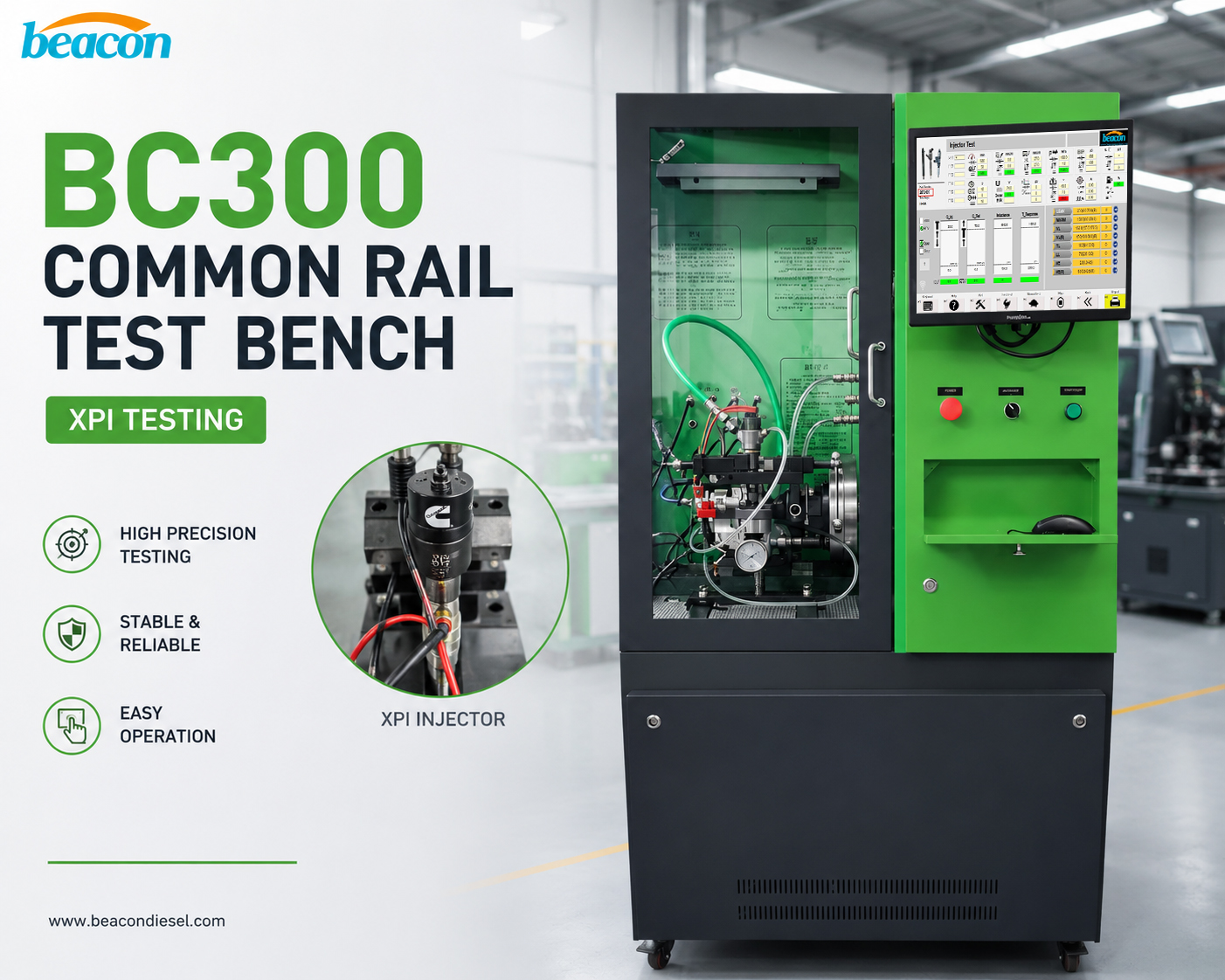
Mastering Professional High Pressure XPI Injector Testing Station: The Ultimate Common Rail Test Bench and Injector and Pump Tester Guide
Jul. 31, 2026Optimize your workshop with our professional high pressure XPI injector testing station. This advanced Common Rail Test Bench and Injector and Pump Tester provides unmatched precision for Cummins XPI systems and global fuel injection calibration needs. (41 words)+ Details
about beacon
PRODUCTS
contact us
TEL: 0086-13583836021
WhatsApp:+86-13583836021
Email: anneli@beacon-machine.com
Add: High Tech Industry Zone of East Tai an city,Shandong Province,China

WhatsApp

Wechat